Summarize with AI
Hiring has changed a lot over the last few years. Recruitment is no longer just about filling open roles quickly. HR teams today are expected to hire faster, reduce hiring costs, improve candidate experience, and make better hiring decisions using data. This is where ATS metrics become important.
An Applicant Tracking System helps recruiters manage applications, track candidate progress, and organize hiring workflows. But the real value of an ATS comes from the data it collects. When HR teams track the right recruitment KPIs, they understand what is working, what is slowing them down, and where improvements are needed.
In 2026, companies that rely on clear recruitment metrics will have a strong advantage. This article explains the top ATS metrics every HR team should track and why each one matters.

Why ATS Metrics Matter for Modern HR Teams
Recruitment decisions based on guesswork often lead to longer hiring cycles and poor hiring outcomes. ATS metrics give HR teams measurable insights into their recruitment process.
When tracked consistently, recruitment KPIs help teams identify the shortcomings in hiring stages. This way, recruiters can improve productivity and reduce hiring costs. With proper ATS metrics, hiring teams can make data-driven decisions. So, instead of asking why hiring is slow or why candidates drop off, HR teams can look at data and find clear answers.
The 10 ATS Metrics That Define Recruitment Success in 2026
Not every recruitment metric deserves equal attention. Many HR teams track large amounts of data but struggle to identify which numbers actually improve hiring outcomes. The goal is not to track more metrics but to track the right ones.
The following ATS metrics focus on speed, hiring quality, cost efficiency, and candidate experience. Together, these recruitment KPIs give HR teams a clear view of how their hiring process performs from the moment a job is opened until a candidate successfully joins the organization.
By monitoring these metrics in order, HR teams can easily identify delays, improve decision-making, and build a recruitment process that is both efficient and scalable for 2026 and beyond.
1. Time to Hire
Time to hire is one of the most important ATS metrics. It measures the number of days between a candidate applying for a role and accepting the job offer.
A long hiring timeline can lead to losing strong candidates to competitors. It also increases workload for recruiters and hiring managers. In contrast, reducing time to hire improves candidate experience and helps businesses secure top talent faster.
Thus, tracking time to hire metrics can help HR teams understand the duration candidates time spent in each stage, whether interview scheduling is causing delays, and/or if is there any delay in approvals.
2. Time to Fill
Time to fill is often confused with time to hire, but they are different. Time to fill measures the number of days from when a job is opened until the position is filled.
This recruitment KPI reflects the efficiency of the entire hiring process, including sourcing and internal approvals. Monitoring this ATS metric helps HR teams plan recruitment timelines more accurately.
If time to fill is consistently high, it may indicate poor sourcing strategies, unrealistic job requirements, slow internal decision-making, and limited candidate pipelines.
3. Source of Hire
Source of hire shows where successful candidates come from. This could include job boards, career pages, employee referrals, social media, or recruitment agencies.
Many companies invest in multiple hiring channels without knowing which ones actually deliver results. Tracking source of hire helps HR teams focus on channels that bring high-quality candidates. Over time, this metric helps build a more efficient hiring funnel.
Why is this metrics highly beneficial for hiring teams? It is because, this metric include:
- Better allocation of recruitment budgets
- Improved sourcing strategies
- Higher quality applicant pools
- Reduced dependency on expensive channels
4. Cost per Hire
Cost per hire measures the total expense involved in hiring a candidate. This includes job advertisements, recruiter time, agency fees, software costs, and onboarding expenses.
In 2026, companies are focusing more on hiring efficiency. Tracking cost per hire helps HR teams balance quality hiring with budget control.
If costs are increasing, HR teams can evaluate expenses and reduce cost per hire without affecting hiring quality. This is a key recruitment goal for growing organizations.
5. Candidate Drop-off Rate
Candidate drop-off rate measures how many applicants leave the hiring process before completion. This is a critical ATS metric that directly impacts hiring success.
High drop-off rates often happen because of long application forms and too many interview rounds. Further, there may be high drop-offs if there is a lack of clarity about the role, but this is just negligence.
Tracking candidate drop-off rate helps HR teams improve candidate experience. A smoother hiring journey leads to better engagement and higher offer acceptance rates.
6. Interview to Offer Ratio
This metric measures how many candidates are interviewed before an offer is made. A high ratio may indicate poor screening or unclear job requirements.
When HR teams monitor this ATS metric, they can understand whether candidate screening needs improvement or hiring managers require clearer evaluation criteria. An optimized interview to offer ratio saves time for both recruiters and candidates.
7. Offer Acceptance Rate
Offer acceptance rate shows the percentage of candidates who accept job offers compared to those who receive them.
A low acceptance rate can signal problems such as:
- Salary expectations not aligned with the market
- Slow offer processes
- Poor candidate experience
- Strong competition from other employers
Tracking this recruitment KPI helps HR teams improve employer branding and offer strategies.
8. Quality of Hire
Quality of hire is one of the most valuable ATS metrics, though it is slightly harder to measure. It evaluates how well new employees perform after joining.
Companies usually measure quality of hire using performance reviews, retention rates, hiring manager feedback, and employee productivity levels.
This metric helps HR teams understand whether their hiring decisions are contributing to long-term business success.
9. Recruitment Funnel Conversion Rate
The recruitment funnel conversion rate tracks how candidates move through different hiring stages. For example, application to screening, screening to interview, interview to offer, and offer to hire.
If a large number of candidates drop at a specific stage, HR teams can investigate the reason and improve that part of the process. This ATS metric helps in improving recruiter efficiency by identifying issues in the hiring process.
10. Hiring Manager Satisfaction
Hiring manager satisfaction measures how satisfied managers are with the candidates hired and the recruitment process itself.
While this metric is often overlooked, it plays a major role in long-term recruitment success. Positive feedback from hiring managers usually indicates strong candidate matching and efficient collaboration between HR and business teams.
Tracking this recruitment KPI ensures that hiring goals align with department expectations.
How ATS Metrics Help HR Teams Prepare for 2026 Hiring Challenges
The hiring landscape in 2026 will continue to focus on speed, data accuracy, and candidate experience. Companies that actively track ATS metrics can adapt faster to market changes.
Recruitment KPIs help HR teams move from reactive hiring to strategic hiring. Instead of solving problems after they occur, teams can identify trends early and make improvements before they impact hiring outcomes.
Data-driven recruitment also helps organizations justify hiring budgets, improve workforce planning, and maintain consistent hiring quality.
Conclusion
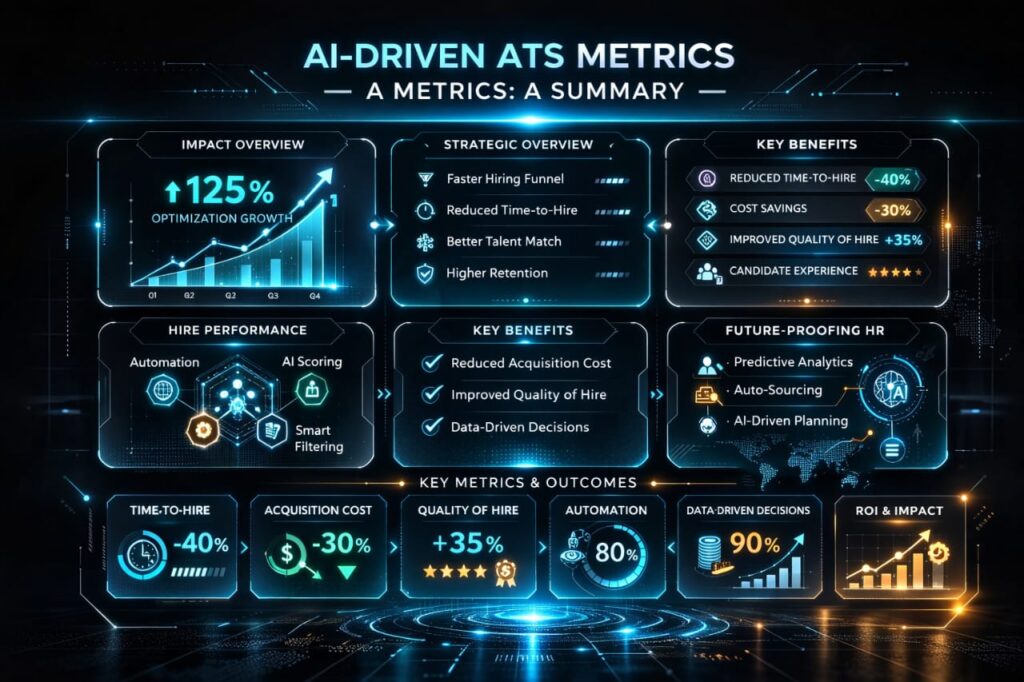
Tracking ATS metrics is no longer optional for HR teams. It is essential for building an efficient and scalable hiring process. Metrics such as time to hire, cost per hire, source of hire, candidate drop-off rate, and quality of hire give clear visibility into recruitment performance.
When HR teams consistently monitor these recruitment KPIs, they can reduce hiring delays, improve candidate experience, and make better hiring decisions backed by data.
Modern recruitment requires tools that not only manage applications but also provide meaningful insights. Platforms like recruitChamp help HR teams track important ATS metrics in one place, making it easier to measure performance, improve hiring workflows, and build stronger recruitment strategies for the future.