Summarize with AI
Diversity in recruitment is no longer a secondary initiative driven by compliance requirements. It has become a core business priority for organizations that want to build resilient, innovative, and high-performing teams. A diverse workforce brings varied perspectives, improves decision-making, and strengthens an organization’s ability to adapt in competitive markets.
However, achieving diversity in hiring is not as straightforward as setting targets or expanding sourcing channels. Many organizations struggle to translate intent into measurable outcomes because bias often exists within the recruitment process itself. These biases may not always be intentional, but they influence how candidates are sourced, evaluated, and selected.
This is where Diversity Recruiting Tools play a critical role. Modern recruitment technology, particularly ATS and CRM systems, helps organizations structure their hiring processes in a way that reduces bias and promotes fair evaluation. Instead of relying on subjective decision-making, companies can use data-driven systems to create consistent, inclusive hiring workflows.
To understand how technology supports diversity initiatives, it is important to first examine where bias typically enters the recruitment process.
Where Does Bias Exist in Traditional Recruitment Processes?
Bias in recruitment does not usually appear as an explicit decision to exclude certain candidates. It often exists in subtle ways throughout the hiring process. From resume screening to interview evaluation, subjective judgments can influence outcomes without clear visibility.
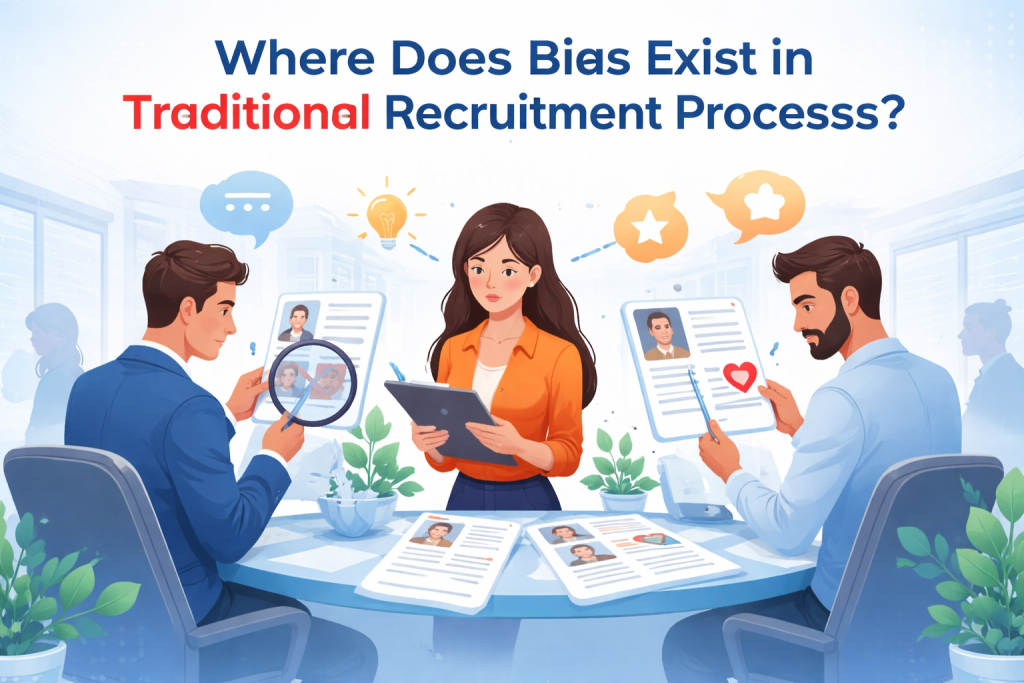
For instance, recruiters may unconsciously favor candidates from certain educational backgrounds or previous employers. Job descriptions may include language that discourages certain groups from applying. Interviewers may evaluate candidates based on personal comfort rather than structured criteria.
These biases accumulate across stages. Even if each decision appears minor, the overall impact can significantly reduce diversity within the hiring pipeline.
The challenge for organizations is not only identifying bias but also controlling it. Manual recruitment processes lack the structure required to ensure consistent and objective evaluation. This is why technology has become central to diversity-focused hiring strategies.
The Role of ATS and CRM Systems in Diversity Hiring
Applicant Tracking Systems and Candidate Relationship Management platforms are often viewed as tools for managing recruitment workflows. However, their role extends beyond operational efficiency. When implemented effectively, these systems act as the foundation for structured and unbiased hiring processes. ATS platforms standardize how candidates move through the recruitment pipeline. They ensure that every applicant is evaluated against the same criteria, reducing the likelihood of inconsistent decision-making. CRM systems, on the other hand, help organizations build and maintain diverse talent pipelines by engaging candidates over time rather than relying on immediate hiring needs.
Together, these systems form the backbone of modern Diversity Recruiting Tools. They enable organizations to move from subjective hiring practices to structured, data-driven decision-making.
Once this foundation is established, technology begins to influence specific aspects of the recruitment process in ways that directly support diversity initiatives.
How Diversity Recruiting Tools Reduce Bias in Hiring
To understand the real value of recruitment technology in diversity hiring, it is important to examine how it impacts each stage of the hiring process. The benefits are not limited to a single function but extend across sourcing, screening, evaluation, and decision-making.
1. Standardizing Candidate Evaluation Across Stages
One of the most effective ways to reduce bias is to ensure that all candidates are evaluated using consistent criteria. Without structure, different recruiters or interviewers may assess candidates differently based on personal preferences.
Diversity Recruiting Tools within ATS platforms enforce standardized evaluation frameworks. Recruiters and hiring managers follow predefined scoring systems and assessment criteria, which reduces variability in decision-making.
This structured approach ensures that candidates are judged based on relevant skills and qualifications rather than subjective impressions.
2. Enabling Blind Screening to Minimize Unconscious Bias
Unconscious bias often enters the hiring process during resume screening. Details such as names, gender, educational institutions, or geographic locations can influence how candidates are perceived.
Many Diversity Recruiting Tools offer blind screening capabilities, where identifying information is removed from candidate profiles during initial evaluation stages. This allows recruiters to focus solely on skills, experience, and qualifications.
By removing factors that may trigger bias, organizations can ensure that more candidates are evaluated fairly and objectively.
3. Expanding Access to Diverse Talent Pipelines
Diversity in hiring is also influenced by where organizations source their candidates. If sourcing strategies are limited to a narrow set of channels, the candidate pool will naturally lack diversity.
CRM systems help organizations build long-term relationships with diverse talent communities. Instead of relying on reactive hiring, recruiters can engage with candidates from different backgrounds over time.
Diversity Recruiting Tools enable segmentation of talent pools based on skills, experience, and diversity goals, allowing recruiters to create more inclusive sourcing strategies.
This proactive approach ensures that diverse candidates are consistently present in the recruitment pipeline.
4. Data-driven Insights for Diversity Metrics
One of the biggest challenges in diversity hiring is measuring progress. Without accurate data, organizations cannot determine whether their initiatives are effective.
Diversity Recruiting Tools provide analytics that track diversity metrics across the hiring pipeline. Organizations can monitor representation at each stage, identify where drop-offs occur, and adjust their processes accordingly.
Basically, if data shows that diverse candidates are being screened out at a higher rate during interviews, companies can review interview practices and introduce structured evaluation frameworks.
Data-driven insights allow organizations to move beyond assumptions and make informed decisions that support diversity goals.
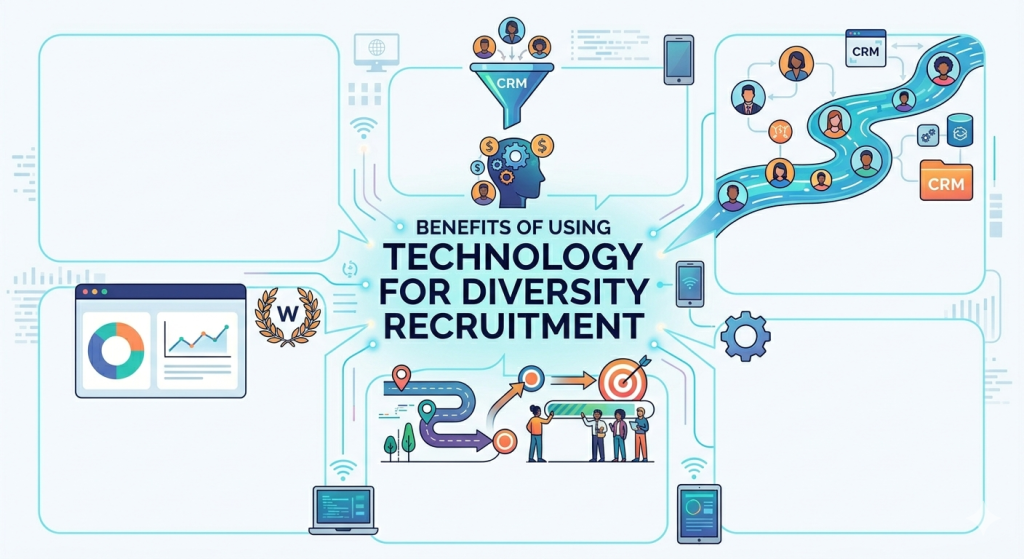
The Benefits of Using Technology for Diversity Recruitment
After understanding how ATS and CRM systems help reduce bias at different stages of hiring, the next step is to look at the broader impact of implementing these systems. When organizations adopt structured Diversity Recruiting Tools, the benefits extend beyond individual hiring decisions and influence overall recruitment performance.
- Consistent and fair candidate evaluation
Structured workflows ensure that every candidate is assessed using the same criteria, reducing variability and subjective decision-making across recruiters and hiring managers.
- Reduced unconscious bias in early-stage screening
Features like blind screening help eliminate identifying details, allowing recruiters to focus purely on skills and qualifications.
- Stronger and more diverse talent pipelines
CRM systems enable continuous engagement with candidates from varied backgrounds, ensuring diversity is built into the pipeline rather than added later.
- Improved visibility into diversity metrics
Recruitment analytics provide clear insights into representation at each stage, helping organizations identify and fix drop-offs in the hiring funnel.
- Better alignment between hiring goals and diversity initiatives
Data-driven recruitment allows organizations to track progress and ensure diversity efforts are directly tied to measurable hiring outcomes.
- Enhanced employer brand perception
A structured and inclusive hiring process improves candidate experience and positions the company as a fair and forward-thinking employer.
How recruitChamp Supports Diversity-focused Recruitment
recruitChamp is designed to help organizations build structured and data-driven recruitment processes that support diversity initiatives. By integrating advanced ATS and CRM capabilities, recruitChamp enables companies to implement Diversity Recruiting Tools within their hiring workflows.
The platform standardizes candidate evaluation through configurable pipelines and structured assessment criteria. Recruiters and hiring managers can evaluate candidates consistently, reducing the impact of subjective decision-making.
recruitChamp also supports blind screening features that allow organizations to remove identifying information during early-stage evaluations. This ensures that candidates are assessed based on their qualifications rather than personal attributes.
In addition, the platform’s CRM capabilities help organizations build and nurture diverse talent pools. Recruiters can engage with candidates over time, ensuring a steady pipeline of diverse talent for future hiring needs.
With built-in analytics, recruitChamp provides visibility into diversity metrics across the recruitment process. Organizations can track representation, identify bottlenecks, and continuously refine their hiring strategies to achieve better outcomes.
By combining structured workflows with data-driven insights, recruitChamp enables organizations to move from intention to execution in diversity recruitment.
Conclusion
Recruiting for diversity requires more than policy changes or short-term initiatives. It requires a fundamental shift in how hiring decisions are made. Without structured processes, bias can persist even in organizations that prioritize inclusion.
Diversity Recruiting Tools powered by ATS and CRM systems provide the framework needed to create fair and consistent hiring practices. By standardizing evaluation, enabling blind screening, expanding talent pipelines, and providing actionable insights, technology helps organizations reduce bias and improve diversity outcomes.
With platforms like recruitChamp, companies can integrate these capabilities directly into their recruitment workflows, ensuring that diversity is not just an objective but a measurable and sustainable outcome.