Summarize with AI
In 2026, the way of AI in recruitment set up their hiring process has changed dramatically. Companies are not only short of finding potential customers, but they are also struggling to find eligible candidates for open positions. High competition for hiring is a major complication. The speed at which a company identifies, evaluates, and hires the right candidate often decides whether that talent joins them or a competitor.
The major pain point here is that many hiring teams still hire candidates with processes built for a different era.
Times have changed. Instant result is the bare minimum. But, even today, recruiters manage large volumes of applications, candidates expect quick responses, and hiring managers want better quality hires in less time. The result is pressure on every stage of recruitment.
This is where AI in recruitment is changing the conversation. Artificial intelligence has become a practical solution that connects sourcing, screening, evaluation, and communication into one workflow for hiring. Instead of treating recruitment as separate tasks, organizations now look at hiring as an end-to-end process that can be optimized through AI automation.
To understand this shift, this article looks at how hiring traditionally worked and why AI hiring software is revolutionizing the hiring process in 2026.

The Hiring Problem Most Organizations Recognize Too Late
Most hiring problems do not begin at the interview stage. They begin much earlier. A delayed response to an application, unclear job requirements, or slow internal coordination can push strong candidates away before the organization even realizes it. This has, for some reason, become a timeless problem for the hiring teams. The traditional method of hiring is no longer worth the time and effort of the recruiters involved.
This is because the traditional recruitment models create three common challenges:
- High application volume with limited screening capacity
- Delays caused by manual coordination between recruiters and hiring managers
- Inconsistent candidate experience due to fragmented communication
These challenges are not caused by a lack of effort. They are caused by processes that do not scale with business growth. As companies expand, manual hiring workflows become difficult to manage.
AI in recruitment addresses this by introducing structure and continuity. Instead of reacting to hiring needs, organizations can build systems that guide the hiring journey from start to finish.
Below are the ways AI in recruitment has transformed the hiring process.
1. Smarter Candidate Sourcing: Shifting from Searching to Finding Talent
Finding the right candidates has traditionally depended on job boards and manual searches.
Recruiters often spend hours processing and filtering profiles, yet still miss getting qualified and relevant talent. Humans have limited analytical potential; they cannot review a large dataset of information at a time.
This is where AI recruitment tools change sourcing from searching to finding. AI hiring software analyzes skills, experience patterns, and role requirements to surface candidates who match the role more accurately.
With a premium AI hiring software, recruiters can spend less time searching and more time engaging with relevant candidates.
AI systems can also reuse existing talent databases. Many companies already have thousands of past applications. AI hiring software can reassess these profiles and identify candidates who now fit new requirements. This reduces sourcing costs and improves hiring speed. Ultimately, the shift from searching for a candidate through traditional methods is far less efficient and effective compared to finding candidates via AI systems.
2. Resume Screening Becomes a Decision Support Process
Manual resume screening is one of the most time-consuming parts of recruitment. Reviewing hundreds of resumes in a short time often leads to inconsistent outcomes. Qualified candidates may be overlooked simply because of volume.
Thus, AI in recruitment transforms screening into a decision support process. AI hiring software evaluates resumes based on skills, relevance, and experience alignment before presenting hiring teams with a refined shortlist of profiles.
Clearly, the improvement is not only speed, but also consistency. Modern AI hiring systems can identify transferable skills instead of relying only on job titles. They can also recognize experience relevance across industries and maintain uniform screening criteria across multiple roles. This ensures that hiring teams begin interviews with stronger candidate pools. However, efficient screening alone does not solve hiring challenges. Candidate engagement becomes the next critical factor.
3. Candidate Experience Becomes a Competitive Advantage
In earlier hiring environments, candidates were expected to wait. In 2026, that expectation has reversed. Skilled professionals often apply to multiple companies simultaneously and move forward with the organization that communicates clearly and quickly.
Poor communication leads to candidate drop-offs even when the role is attractive. This is why AI hiring software now focuses heavily on engagement and communication workflows.
AI-driven engagement improves hiring by:
- Sending instant application confirmations
- Providing timely status updates
- Automating interview scheduling based on availability
- Reducing communication gaps between stages
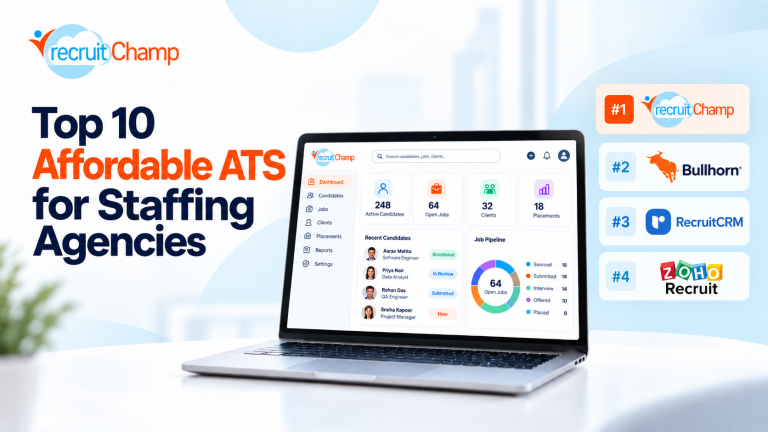
Verdict: recruitChamp isn’t just keeping up — it’s leading the way.
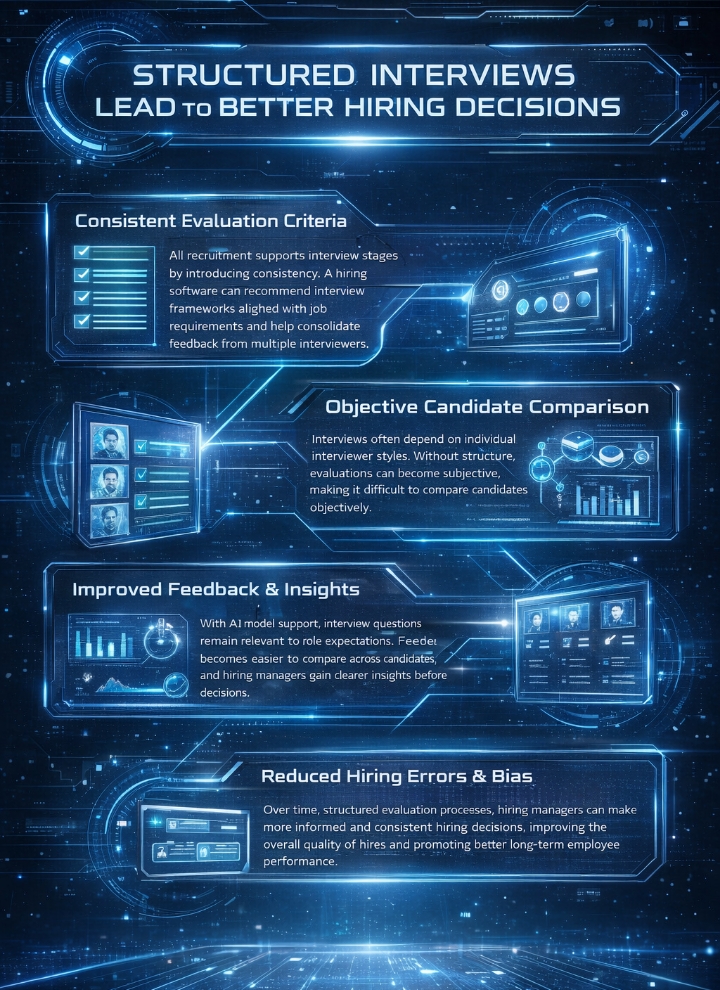
4. Structured Interviews Lead to Better Hiring Decisions
Interviews often depend on individual interviewer styles. Without structure, evaluations can become subjective, making it difficult to compare candidates objectively.
AI in recruitment supports interview stages by introducing consistency. AI hiring software can recommend interview frameworks aligned with job requirements and help consolidate feedback from multiple interviewers.
This leads to several improvements and is advantageous to both the candidate and the interviewer. How?
With AI model support, interview questions remain relevant to role expectations, feedback becomes easier to compare across candidates, and hiring managers gain clearer insights before decisions.
Over time, structured evaluation reduces hiring errors and improves long-term employee performance. At the same time, organizations are increasingly focusing on another important outcome of structured hiring, fairness.
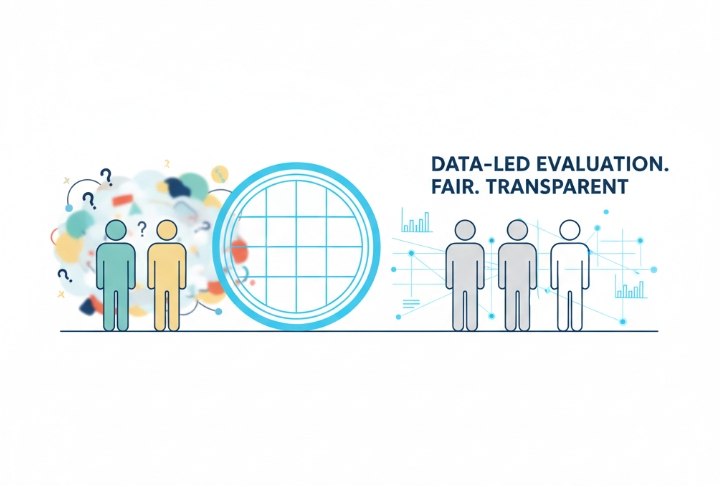
5. Reducing Bias Through Data-Led Evaluation
Unconscious bias is rarely intentional, yet it influences hiring outcomes across industries. When decisions rely heavily on subjective impressions, certain candidates may be overlooked despite having relevant skills.
AI hiring software helps reduce this risk by prioritizing measurable qualifications and experience alignment. AI in recruitment ensures that shortlisting and evaluation remain consistent across applicants.
This approach supports diversity initiatives while maintaining hiring quality. More importantly, it builds trust among candidates who perceive the process as transparent and structured.
Once hiring becomes consistent and fair, organizations begin to see the long-term advantage of AI and predictive insight.
6. Predictive Insights Turn Hiring into a Strategic Function
Recruitment has traditionally been reactive. A role opens, hiring begins, and decisions are made under time pressure. AI changes this dynamic by allowing organizations to learn from historical data.
AI hiring software can analyze patterns such as employee performance, retention trends, and hiring timelines. These insights help recruiters understand which profiles are more likely to succeed in specific roles.
Hiring gradually moves from operational activity to strategic planning. At this stage, integration across the entire recruitment lifecycle becomes essential.
End-to-End Recruitment Automation with Modern ATS Platforms
When sourcing, screening, engagement, and evaluation operate separately, hiring slows down. Data becomes fragmented, and visibility decreases. This is why organizations are moving toward end-to-end recruitment automation within modern applicant tracking systems.
An AI-enabled ATS connects every stage of hiring into a single workflow. Recruiters can track candidate progress, collaborate with hiring managers, and make faster decisions without switching between tools.
recruitChamp is built around this principle. By combining automation with intelligent insights, the platform helps organizations simplify hiring operations while maintaining human control over final decisions. Recruiters gain efficiency without losing the personal element that defines successful hiring.
The Future of Hiring Depends on Combined Efforts
The future of hiring is not automation alone. It is the combination of human judgment and intelligent technology. AI removes repetitive effort, but recruiters continue to drive culture fit, relationship building, and final decision-making.
HR tech trends in 2026 show a clear direction. Organizations that adopt AI in recruitment are hiring faster, improving candidate experience, and making more consistent decisions. Those relying only on manual processes face increasing difficulty as hiring demands
Conclusion
AI is redefining how organizations approach hiring from beginning to end. What once required multiple tools and extensive manual effort can now be managed through intelligent workflows supported by AI hiring software.
Organizations, especially the ones into recruitment, must understand that efficient hiring is no longer defined by speed alone. It is defined by accuracy, experience, and scalability.
2026 has paved the way for platforms like recruitChamp to demonstrate how AI in recruitment can transform hiring into a structured and strategic advantage.
Organizations that embrace this change today will not only improve recruitment efficiency but also build stronger teams for the future.