Hiring automation is no longer optional. It is becoming a necessity. This is because companies today receive a high volume of applications for every open role. Managing these applications manually slows down hiring, increases errors, and creates inefficiencies across recruitment teams.
Most organizations invest in Applicant Tracking Systems, sourcing tools, and automation platforms. But very few stop to think about the core engine that powers all of it. That engine is resume parsing.
Without resume parsing, hiring automation simply does not function effectively. It is the backbone that converts unstructured resumes into usable, searchable, and structured data.
If hiring automation is the system, resume parsing is the foundation holding it together.
Let us understand why

What is Resume Parsing?
Resume parsing is the process of automatically extracting key information from resumes and converting it into structured data fields.
When a candidate uploads a resume, the system reads the file and identifies important details like the candidate’s name, contact info, experience, job titles, skills, education, employment dates, etc.
Instead of storing the resume as a static document, the system transforms it into a structured candidate profile. This process is handled by ATS resume parsing technology inside modern recruitment platforms.
It eliminates the need for manual data entry and makes candidate information searchable within seconds.
Why Hiring Automation Depends on Resume Parsing
Hiring automation includes processes such as automated screening, shortlisting, candidate ranking, and database searches. All these processes rely on structured data.
If resumes remain as PDF files inside a system, automation cannot function properly. The system cannot filter, match, or rank candidates accurately without understanding the data inside those files.
Resume parsing converts documents into structured information that automation tools can process.
In simple terms, no parsing would mean no structured data. And no structured data would mean no automation. That is why resume parsing sits at the center of hiring automation.
The Link Between ATS Resume Parsing and Automation
An Applicant Tracking System manages candidate workflows. But its effectiveness depends heavily on ATS resume parsing.
When a candidate applies for a job, the ATS uses parsing technology to extract relevant information and map it into predefined fields.
Once the data is structured, the system can:
- Match skills with job requirements
- Filter candidates based on experience
- Rank profiles according to keywords
- Create shortlists automatically
- Enable advanced search across databases
Without ATS resume parsing, the ATS becomes little more than a storage system for resumes. And with parsing, it becomes a powerful automation engine.
Resume Parsing Accuracy Determines Automation Quality
If resume parsing accuracy is low, hiring automation will produce weak results.
For instance, if job titles are incorrectly extracted, experience calculations become inaccurate. If skills are misidentified, candidate matching becomes unreliable. Or if dates are parsed incorrectly, employment history may appear misleading.
Poor resume parsing accuracy creates flawed shortlists, delays hiring decisions, and increases manual review workload.
On the other hand, high resume parsing accuracy ensures reliable candidate profiles, accurate skill matching, consistent experience calculation, and better automated ranking. This is why resume parsing accuracy is critical to the success of hiring automation.
How Resume Parsing Reduces Manual Work
Before automation, recruiters manually reviewed each resume and entered candidate information into systems.
This created several challenges like time consumption in data entry, inconsistent formatting, high error rates, slow response time, and more. But resume parsing removes this repetitive workload.
When a candidate uploads a resume, the system automatically extracts and organizes the information. Recruiters no longer need to retype details. Instead, they can immediately focus on evaluating the candidate. This shift from administrative work to evaluation is what makes hiring automation practical.
Without resume parsing, automation would still require manual input at the beginning of the process.
- Structured Data Enables Smart Screening
Smart screening is a key feature of hiring automation. It allows recruiters to filter candidates by skills, experience range, location, or qualifications.
But smart screening depends entirely on structured data.
Resume parsing transforms unstructured text into searchable fields. Once structured, the system can apply filters and conditions. This level of automation is impossible without effective ATS resume parsing.
2. Resume Parsing Supports Scalable Hiring
As companies grow, application volumes increase. Manual screening cannot scale efficiently. It leads to delays and recruiter burnout.
Resume parsing allows organizations to handle large volumes of applications without increasing manual effort. High resume parsing accuracy ensures that even during peak hiring periods, candidate data remains reliable and consistent.
This scalability is essential for enterprises, fast-growing startups, and recruitment agencies managing multiple job openings simultaneously. Hiring automation cannot scale without a strong parsing foundation.
3. Improving Candidate Database Management
Many companies overlook the long term value of structured candidate databases. When resumes are stored only as files, they are difficult to reuse. Recruiters must manually search through documents to find suitable candidates for new roles.
With resume parsing, every resume becomes a structured profile stored in a searchable database.
This enables talent rediscovery, faster re-engagement of past applicants, and skill-based talent pools. Over time, this structured data becomes a strategic hiring asset.
The Role of Resume Parsing in Automated Matching
Automated matching is one of the most important features of hiring automation. Matching systems compare job descriptions with candidate profiles and identify the most relevant applicants. This process relies entirely on parsed data.
If resume parsing accuracy is strong, matching becomes precise and meaningful. If parsing accuracy is weak, matching results become unreliable.
Effective parsing ensures that skills, job titles, and experience levels are correctly identified and categorized. Only then can automation generate accurate recommendations.

How Does Resume Parsing Enhance Recruiter Productivity?
Hiring automation aims to increase recruiter productivity. Resume parsing plays a direct role in achieving this goal. When candidate data is automatically structured:
- Recruiters spend less time organizing resumes
- Screening becomes faster
- Shortlists are generated quickly
- Communication with candidates begins sooner
Instead of spending hours on administrative tasks, recruiters can focus on interviews, relationship building, and employer branding. This productivity boost directly impacts hiring speed and candidate experience.
The Business Impact of High Resume Parsing Accuracy
Resume parsing accuracy influences key hiring metrics. That’s why when accuracy is low, automation becomes unreliable, and recruiters revert to manual review. This defeats the purpose of hiring automation.
So, investing in strong ATS resume parsing technology ensures consistent data quality and sustainable automation. All-in-all when the resume parsing accuracy is high, organizations experience the following:
- Reduced time to shortlist
- Improved quality of candidate matching
- Lower manual review workload
- Faster hiring cycles
- Better candidate database utilization
Why Resume Parsing is the True Backbone
Hiring automation includes many visible features such as dashboards, filters, analytics, and automated communication. But behind all these features lies structured candidate data. Resume parsing is the process that creates that data.
Without parsing, automation tools cannot filter effectively. Matching systems would fall short. Analytics cannot generate accurate reports. And talent pools cannot be organized.
Resume parsing supports every automated function within an ATS. That is why it is not just a feature. It is the backbone.
How recruitChamp Strengthens Hiring Automation
At recruitChamp, we recognize that hiring automation begins with reliable data.
Our ATS resume parsing technology is built to ensure high resume parsing accuracy across various formats and industries.
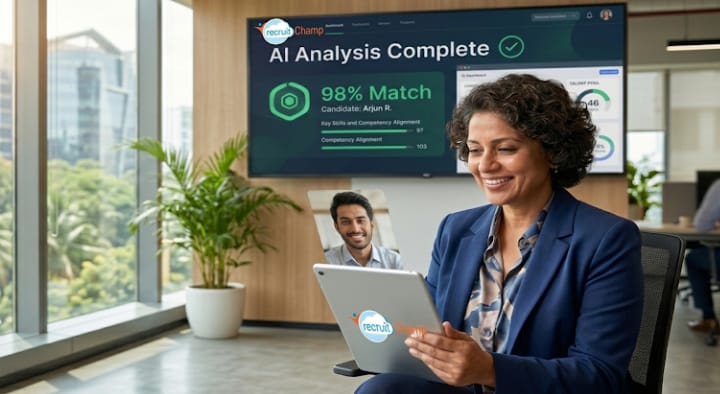
When candidates upload their resumes, recruitChamp automatically extracts and structures the information into organized candidate profiles. This enables smart filtering, accurate skill matching, efficient database searching, faster shortlisting, and scalable growth.
By focusing on resume parsing accuracy, recruitChamp ensures that automation delivers meaningful results.
We understand that automation should reduce workload, not create new challenges. That is why our parsing engine is designed to maintain consistency, precision, and speed. When the foundation is strong, every automated feature performs better.
Conclusion
Hiring automation promises efficiency, speed, and better decision-making. But automation cannot function without structured data. Resume parsing transforms unstructured resumes into organized candidate profiles that automation tools can process. It is truly the backbone of hiring automation.
For organizations looking to build efficient and scalable recruitment processes, focusing on resume parsing accuracy and strong ATS resume parsing capabilities can be a game-changer.